Extracorporeal Shock Wave Therapy (ESWT)
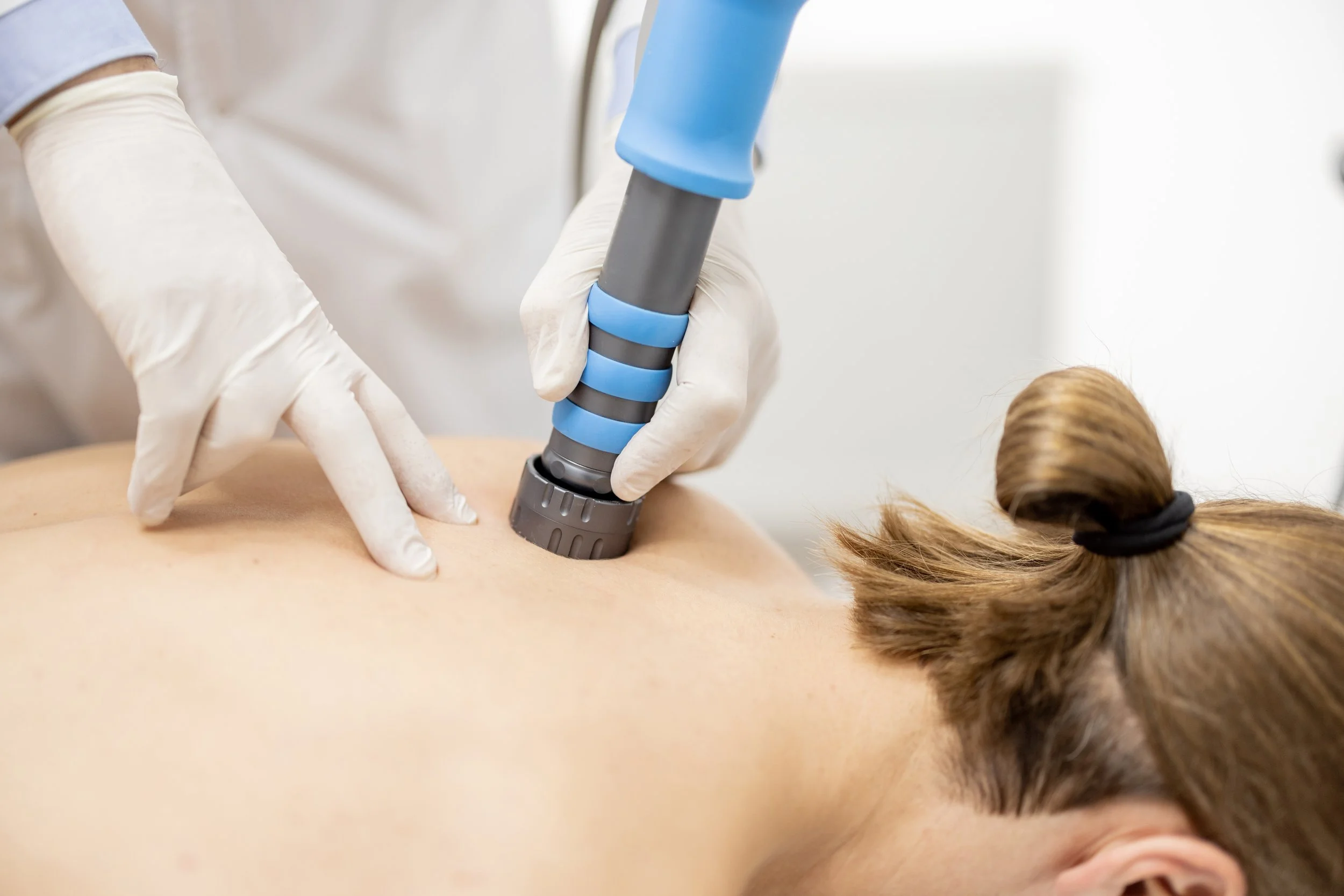
Extracorporeal Shock Wave Therapy (ESWT) is a non-invasive treatment that uses percussive sound waves to deliver mechanical energy to a targeted area of the body. This provides a stimulus to the tissues in order to help influence pain sensitivity, circulation, and the body's tissue-remodelling processes.
ESWT may be used as part of a comprehensive physiotherapy treatment plan to help reduce pain, improve tissue stress capacity, and support the rehabilitation of persistent tendon and musculoskeletal conditions.
ESWT is particularly useful for some conditions that have been slow to respond to exercise, activity modification, and other forms of treatment.
What conditions can ESWT help?
ESWT can be used to treatment a number of persistent tendon and musculoskeletal conditions, including:
Achilles tendinopathy
Plantar fasciopathy/plantar heel pain
Patellar tendinopathy
Tennis elbow
Rotator cuff-related shoulder pain
Gluteal tendinopathy
Hamstring tendinopathy
Other persistent tendinopathies
Some chronic muscle and soft-tissue conditions

ESWT is not appropriate for every injury or every patient.
Your physiotherapist will assess your condition and determine whether it is a suitable treatment option for you.
Frequently asked Questions
-
You may feel some discomfort during treatment, particularly when treating a sensitive or painful area. You will feel a series of tapping or pulsing sensations that can range from mild to moderately uncomfortable depending on the area being treated and the sensitivity of the tissue. The intensity can be adjusted throughout the treatment to keep it within a tolerable range. The treatment itself is relatively quick, and most people tolerate it well.
-
The number of treatments varies depending on your condition, how long you have had your symptoms, and how you respond to treatment. Current evidence would support 3-6 treatments spaced approximately 7-10 days apart. Your physiotherapist will recommend an appropriate treatment schedule following your assessment.
-
Some people notice an improvement in pain following treatment, while others notice changes gradually over the course of their rehabilitation.
ESWT is not intended to be a quick fix. The goal is to support longer-term recovery, and the treatment is often combined with progressive exercise and load management.
-
It is normal to experience some temporary soreness, tenderness, or mild discomfort following ESWT. This generally settles relatively quickly.
Your physiotherapist will provide specific guidance about activity and exercise following treatment based on your condition and treatment goals.
-
No. Although both treatments use a handheld applicator and are sometimes used in physiotherapy, they use different forms of energy and have different treatment effects.
ESWT uses mechanical pressure waves to deliver energy to targeted tissues, while therapeutic ultrasound uses high-frequency sound waves for a local treatment effect.
-
If you've been dealing with persistent tendon or musculoskeletal pain that hasn't fully improved with traditional treatment, ESWT may be worth considering.
Book an assessment with a Bodyworx physiotherapist to find out whether Shock Wave Therapy is appropriate for your condition and goals.